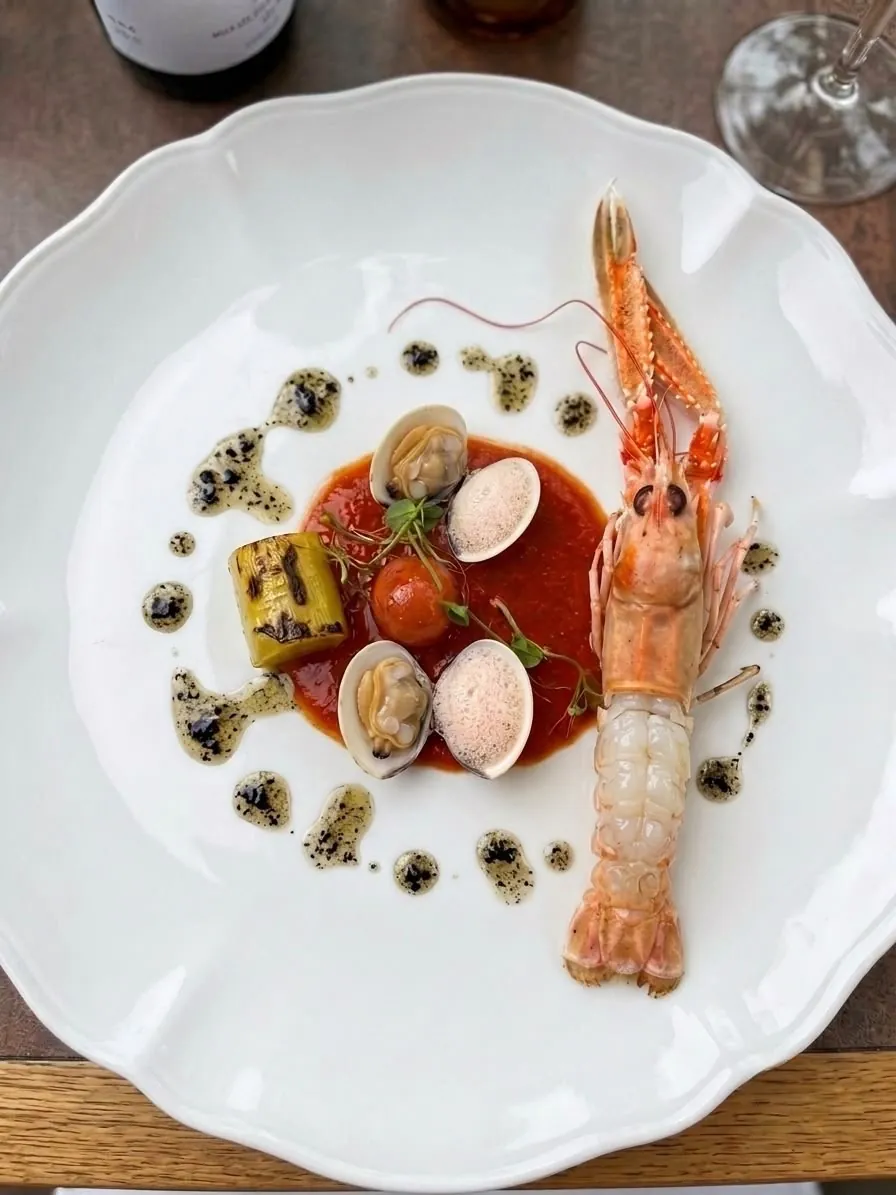
AsketCuisine · MethodologyMetodologija
Seven axes · Seven roles · Nine principles · One philosophy Sedam osa · Sedam uloga · Devet principa · Jedna filozofija
A culinary operating systemKulinarski operativni sistem
AsketCuisine is a culinary operating system — a structured methodology for thinking, creating, and executing at the intersection of gastronomy, design, and human experience.
It is not a restaurant. Not a cookbook. Not a trend. It is a framework that governs how a kitchen thinks: what it selects, what it refuses, how it communicates, and why every decision carries weight.
The name carries its intent: asket — the ascetic — one who removes excess to reveal what is essential. In cuisine, this is radical honesty. The ingredient must justify its presence. The technique must serve the idea. The experience must exceed the expectation — not through addition, but through precision.
AsketCuisine does not pursue novelty for its own sake. It pursues depth. A single idea, executed with complete commitment, is worth more than ten ideas executed with partial attention. The methodology exists to protect this commitment — to give it structure, language, and a means of transmission.
AsketCuisine je kulinarski operativni sistem — strukturirana metodologija za razmišljanje, stvaranje i izvođenje na preseku gastronomije, dizajna i ljudskog iskustva.
Nije restoran. Nije kuvarska knjiga. Nije trend. To je okvir koji određuje kako kuhinja misli: šta bira, šta odbija, kako govori i zašto svaka odluka nosi težinu.
Ime nosi svoju nameru: asket — onaj koji uklanja višak da bi otkrio suštinu. U kuhinji, ovo znači radikalnu iskrenost. Sastojak mora da opravda svoje prisustvo. Tehnika mora da služi ideji. Iskustvo mora da nadmaši očekivanje — ne dodavanjem, već preciznošću.
AsketCuisine ne teži novini radi same novine. Teži dubini. Jedna ideja, sprovedena s potpunom posvećenošću, vrednija je od deset ideja kojima je pažnja razdeljena. Metodologija postoji da tu posvećenost zaštiti — da joj da strukturu, jezik i način prenošenja.
Simultaneous lenses — always activeSimultane perspektive — uvek aktivne
Every decision within AsketCuisine is evaluated across seven axes. These are not departments or sequential stages — they are simultaneous lenses, always active, always in conversation with each other. No axis dominates; all seven must be satisfied. The productive tension between them is where quality lives.
Svaka odluka unutar AsketCuisine vrednuje se kroz sedam osa. Ovo nisu odeljenja niti uzastopne etape — to su istovremene perspektive, uvek aktivne, uvek u međusobnom dijalogu. Nijedna osa ne dominira; sve sedam moraju biti zadovoljene. Plodna napetost između njih jeste mesto gde nastaje kvalitet.
Focus is the first axis and the condition for all others. It is not a creative choice — it is a structural prerequisite. Without focus, the other six axes cannot operate with integrity. Focus means the kitchen has identified a single, clear idea for each dish, each menu, each service — and refuses to dilute it.
In practice, focus manifests as the ability to say no. To a garnish that does not serve the composition. To a technique that impresses without contributing. To an ingredient that is interesting but irrelevant. The focused kitchen is not empty — it is exact. Every element present earns its place through direct contribution to the central idea.
What is the single idea this dish argues?
Does every element on the plate serve that idea directly?
What have we refused — and why?
If we removed one element, would the idea become clearer?
Fokus je prva osa i preduslov za sve ostale. Nije kreativni izbor — to je strukturni zahtev. Bez fokusa, preostalih šest osa ne može da funkcioniše s integritetom. Fokus znači da je kuhinja za svako jelo, svaki meni, svaki servis pronašla jednu jasnu ideju — i odbija da je razvodni.
U praksi, fokus se ispoljava kao sposobnost da se kaže ne. Garnišu koji ne služi kompoziciji. Tehnici koja ostavlja utisak, ali ništa ne doprinosi. Sastojku koji je zanimljiv, ali nebitan. Usredsređena kuhinja nije prazna — ona je precizna. Svaki element koji se nađe na tanjiru tu mesto zaslužuje direktnim doprinosom centralnoj ideji.
Koja je jedina ideja koju ovo jelo zastupa?
Da li svaki element na tanjiru direktno služi toj ideji?
Šta smo odbili — i zašto?
Ako uklonimo jedan element, da li bi ideja postala jasnija?
Every ingredient carries a provenance, a season, a sensory signature, and an ethical implication. Ingredient Intelligence is the deep knowledge of raw material — its origin, how it was grown or raised, at what point of its life it is most itself, and what it wants to become.
The axis governs sourcing decisions: which producers to trust, which seasons to honor, which combinations reveal rather than obscure. It asks not only "is this ingredient excellent?" but "does this ingredient belong here, in this dish, at this moment?"
Where does this ingredient come from, and does that matter?
Is this the right moment in its season?
What does this ingredient want to become?
Are we revealing or overwriting its essential character?
Svaki sastojak nosi poreklo, sezonu, senzorni otisak i etičku dimenziju. Inteligencija sastojaka podrazumeva duboko poznavanje sirovog materijala — odakle potiče, kako je uzgajan, u kom trenutku svog životnog ciklusa je najsuštinskiji i u šta teži da se pretvori.
Ova osa usmerava odluke o nabavci: kojim proizvođačima verovati, koje sezone poštovati, koje kombinacije otkrivaju a koje zamagljuju. Ona ne pita samo „da li je ovaj sastojak odličan?" — već „da li ovaj sastojak ovde pripada, u ovom jelu, u ovom trenutku?"
Odakle dolazi ovaj sastojak — i da li je to važno?
Da li je ovo pravi trenutak u njegovoj sezoni?
Šta ovaj sastojak želi da postane?
Da li otkrivamo ili prekrivamo njegov suštinski karakter?
Technique is not performance. It is the invisible infrastructure of flavor — the accumulated knowledge of what heat does to protein, what salt does to cell walls, what time does to collagen. Precision is the respect paid to the ingredient: treating it exactly as it requires, no more and no less.
Technical Precision also governs repeatability. A dish that succeeds once is an experiment. A dish that succeeds a hundred times is a standard. The methodology demands that technique be understood deeply enough to be transmitted — from chef to cook, from session to session.
Do we understand why this technique works, not just that it works?
Can this preparation be executed identically tomorrow?
Is the technique serving the ingredient, or the chef's ego?
Tehnika nije nastup. Ona je nevidljiva infrastruktura ukusa — nagomilano znanje o tome šta toplota čini proteinima, šta so čini ćelijskim zidovima, šta vreme čini kolagenu. Preciznost je poštovanje prema sastojku: tretirati ga tačno onako kako zahteva — ni više ni manje.
Tehnička preciznost takođe podrazumeva ponovljivost. Jelo koje uspe jednom — eksperiment je. Jelo koje uspe sto puta — to je standard. Metodologija zahteva da tehnika bude razumljena dovoljno duboko da se može prenositi dalje: od kuvara do kuhinjskog pomoćnika, od jednog servisa do sledećeg.
Da li razumemo zašto ova tehnika funkcioniše, a ne samo to da funkcioniše?
Da li se ova priprema može identično ponoviti sutra?
Da li tehnika služi sastojku ili kuvarevom egu?
A meal is a story. It has chapters, tension, development, and resolution. Narrative Architecture governs the sequence — not just what is served, but when and why. The order of courses is as important as their content: what opens the appetite, what builds expectation, what delivers the peak, and how the story closes.
This axis is most visible in the Chef's Table — a 9-course journey that functions as a composed argument about what food can say. Each course is a chapter; the full sequence is a statement. The Architect governs this axis as part of the menu's total design.
Does the sequence build or flatten energy?
Where is the peak — and does the menu earn it?
How does this meal open, and how does it close?
What is the guest feeling at each transition?
Obrok je priča. Ima poglavlja, napetost, razvoj i razrešenje. Narativna arhitektura određuje sekvencu — ne samo šta se servira, već kada i zašto. Redosled kurseva jednako je važan kao i njihov sadržaj: šta otvara apetit, šta gradi iščekivanje, šta donosi vrhunac i kako se priča zatvara.
Ova osa najjasnije dolazi do izražaja u Kuvarskom stolu — putovanju od devet kurseva koje funkcioniše kao smišljeni argument o tome šta hrana može da kaže. Svaki kurs je poglavlje; celokupna sekvenca je iskaz. Architect upravlja ovom osom kao delom ukupnog dizajna menija.
Da li sekvenca gradi energiju ili je sravnjuje?
Gde je vrhunac — i da li ga meni opravdava?
Kako se ovaj obrok otvara i kako se zatvara?
Šta gost oseća u svakom prelasku između kurseva?
Flavor does not exist in isolation. It is shaped by light, sound, spatial temperature, the weight of cutlery, the texture of linen, the silence between courses. Sensory Design refuses to treat taste as separate from environment — they are a single system, and the kitchen is responsible for the whole.
Plating is a visual argument: it tells the guest what to expect before they taste. The table is a stage. The room is a score. Nothing in the sensory environment is accidental — or if it is, it is a failure of this axis.
What does this dish look like before it is tasted — and does that prepare correctly?
What sounds, temperatures, and textures frame this meal?
Is anything in the environment working against the food?
Ukus ne postoji zasebno. Oblikuju ga svetlost, zvuk, temperatura prostora, težina pribora za jelo, tekstura stoljnjaka, tišina između kurseva. Senzorni dizajn odbija da ukus posmatra odvojeno od okruženja — to je jedan jedinstven sistem, a kuhinja odgovara za celinu.
Prezentacija je vizuelni argument: govori gostu šta da očekuje pre nego što zagrize. Sto je pozornica. Sala je partitura. Ništa u senzornom okruženju nije slučajno — a ako jeste, to je propust ove ose.
Kako ovo jelo izgleda pre nego što se okusi — i da li to ispravno priprema gosta?
Koji zvuci, temperature i teksture uokviruju ovaj obrok?
Da li nešto u okruženju radi protiv hrane?
Hospitality is not service. Service is transactional — it delivers what is requested. Hospitality is relational — it gives what is needed before it is requested. The guest is not a customer to be processed; they are a person to be understood.
Human Hospitality governs the quality of attention: the ability to read a table, to know when to speak and when to be absent, to anticipate without intruding. The goal is for every guest to leave feeling that this meal was made specifically for them — which, in the world of AsketCuisine, it was.
Does this guest feel seen — as a person, not a table number?
What do they need that they haven't asked for?
Will they remember how they felt, not only what they ate?
Gostoprimljivost nije usluga. Usluga je transakcijska — isporučuje ono što je zatraženo. Gostoprimljivost je odnosna — daje ono što je potrebno pre nego što bude zatraženo. Gost nije klijent koji se obrađuje; to je čovek koga treba razumeti.
Ljudska gostoprimljivost određuje kvalitet pažnje: sposobnost da se iščita sto, da se zna kada progovoriti a kada se povući, da se predvidi bez nametanja. Cilj je da svaki gost ode s osećajem da je ovaj obrok napravljen baš za njega — što je u svetu AsketCuisine i istina.
Da li se gost oseća viđenim — kao osoba, a ne kao broj stola?
Šta mu treba, a nije zatražio?
Da li će pamtiti kako se osećao, a ne samo šta je jeo?
Philosophical Coherence is the meta-axis: it governs all others. It is the overarching value system that determines what AsketCuisine is willing to do and what it refuses absolutely. Without this axis, the others can be technically satisfied while the system loses its identity.
Coherence means that a guest who reads the methodology, then eats at the Chef's Table, then visits the website experiences the same values expressed through different media. There is no gap between what is said and what is done. The kitchen and the philosophy are not separate things.
Is this decision consistent with everything we have said we are?
Does this create a contradiction with our stated values?
What are we refusing — and does that refusal define us correctly?
Filozofska koherentnost je meta-osa: ona upravlja svim ostalima. To je sveobuhvatni vrednosni sistem koji određuje šta je AsketCuisine spreman da uradi i šta apsolutno odbija. Bez ove ose, sve ostale mogu biti tehnički zadovoljene, a sistem i dalje gubi identitet.
Koherentnost znači da gost koji čita metodologiju, zatim jede za Kuvarskim stolom, zatim poseti sajt — svuda doživljava iste vrednosti, samo kroz različite oblike. Nema razmaka između onoga što se govori i onoga što se čini. Kuhinja i filozofija nisu odvojene stvari.
Da li je ova odluka dosledna svemu što smo rekli da jesmo?
Da li ovo stvara protivrečnost s našim vrednostima?
Šta odbijamo — i da li nas to odbijanje ispravno određuje?
From foundation to vision — a path of conscious growthOd temelja do vizije — put svesnog rasta
AsketCuisine defines seven roles that form both a philosophy of the plate and an operational path through the kitchen. Each role carries a specific force — on the plate and in the team. The names describe what the role does to the dish and to the system: framing, anchoring, binding, transforming, sharpening, weaving, architecting. The progression from I to VII is a career path built on expanding competence, not accumulating authority. A single person may hold multiple roles. What matters is that each function is consciously held.
AsketCuisine definiše sedam uloga koje čine istovremeno filozofiju tanjira i operativni put kroz kuhinju. Svaka uloga nosi specifičnu silu — na tanjiru i u timu. Imena opisuju šta uloga čini jelu i sistemu: uokviravanje, usidravanje, povezivanje, transformacija, izoštravanje, tkanje, projektovanje. Progresija od I do VII je karijerski put izgrađen na širenju kompetencija, ne na akumulaciji autoriteta. Jedna osoba može nositi više uloga. Ono što je bitno jeste da svaka funkcija bude svesno prihvaćena.
The Framer builds the foundation on which everything else stands. On the plate, the Framer is the base — the element that gives form and structure to the composition. In the kitchen, this is the entry role: mastering mise en place, executing recipes to standard, building the discipline of preparation that every other skill depends on.
The Framer does not improvise. They execute — with precision, with consistency, with the understanding that a foundation built carelessly will crack under pressure. The best Framers are invisible: their work is so reliable that nobody notices it.
Executes recipes and prep lists to documented standard
Maintains mise en place discipline — station setup, labeling, FIFO
Governs the axis of Focus
Builds the habits on which every other role depends
Learns to see the kitchen as a system, not a collection of tasks
Framer gradi temelj na kome sve ostalo stoji. Na tanjiru, Framer je baza — element koji daje formu i strukturu kompoziciji. U kuhinji, ovo je ulazna uloga: savladavanje mise en place-a, izvršavanje recepata po standardu, izgradnja discipline pripreme od koje zavisi svaka druga veština.
Framer ne improvizuje. Izvršava — precizno, konzistentno, sa razumevanjem da temelj izgrađen nemarno puca pod pritiskom. Najbolji Frameri su nevidljivi: njihov rad je toliko pouzdan da ga niko ne primećuje.
Izvršava recepte i prep liste prema dokumentovanom standardu
Održava mise en place disciplinu — postavljanje stanice, označavanje, FIFO
Upravlja osom Fokusa
Gradi navike od kojih zavisi svaka druga uloga
Uči da vidi kuhinju kao sistem, ne kao kolekciju zadataka
The Anchor holds the kitchen steady when pressure threatens to break it. On the plate, the Anchor is the structural element — the protein cooked to exact temperature, the component that gives the dish its backbone. In the kitchen, the Anchor is the technical master: capable of working any station, executing any technique, maintaining quality when orders stack up and the team begins to strain.
The Anchor's discipline is precision without rigidity. They understand why each technique works at a fundamental level, which allows them to adapt when conditions change while maintaining the integrity of the result.
Masters and executes all technical processes in the kitchen
Maintains quality consistency across all stations and services
Develops and documents preparation standards
Governs the axis of Technical Precision
Trains others in technique — ensuring transmission of knowledge
Anchor drži kuhinju stabilnom kada pritisak preti da je slomi. Na tanjiru, Anchor je strukturni element — protein kuvan na tačnu temperaturu, komponenta koja jelu daje kičmu. U kuhinji, Anchor je tehnički majstor: sposoban da radi na bilo kojoj stanici, izvrši bilo koju tehniku, održi kvalitet kada se narudžbe gomilaju.
Disciplina Anchora je preciznost bez krutosti. Razume zašto svaka tehnika funkcioniše na fundamentalnom nivou, što mu omogućava da se prilagodi kada se uslovi promene a da sačuva integritet rezultata.
Savladava i sprovodi sve tehničke procese u kuhinji
Održava konzistentnost kvaliteta na svim stanicama i servisima
Razvija i dokumentuje standarde pripreme
Upravlja osom Tehničke preciznosti
Obučava druge u tehnici — osigurava prenos znanja
The Binder connects the kitchen to the world outside it. On the plate, the Binder is the element that gives a dish cohesion and depth — the sauce that marries flavors, the fat that carries aroma. In the kitchen, the Binder owns sourcing: knowing the producers, understanding the seasons, selecting the raw material that sets the ceiling for everything the kitchen can achieve.
The Binder maintains relationships with producers over seasons and years. They know which week the asparagus peaks, which fisherman brings the best octopus, which farm's lamb has the mineral quality that others lack. Their choices are the first creative act in the chain.
Sources and selects all primary ingredients
Maintains ongoing relationships with producers and suppliers
Tracks seasonal availability and peak moments
Governs the axis of Ingredient Intelligence
Brings ingredient stories into the kitchen's vocabulary
Binder povezuje kuhinju sa svetom izvan nje. Na tanjiru, Binder je element koji jelu daje koheziju i dubinu — sos koji ženi ukuse, masnoća koja nosi aromu. U kuhinji, Binder je vlasnik nabavke: poznavanje proizvođača, razumevanje sezona, selekcija sirovina koje postavljaju plafon za sve što kuhinja može postići.
Binder održava odnose sa proizvođačima kroz sezone i godine. Zna koja nedelja špargle dostižu vrhunac, koji ribar donosi najbolju hobotnicu, čije jagnje ima mineralnost koja drugima nedostaje.
Nabavlja i selektuje sve primarne namirnice
Održava kontinuirane odnose sa proizvođačima i dobavljačima
Prati sezonsku dostupnost i vrhunce
Upravlja osom Inteligencije sastojaka
Donosi priče o sastojcima u vokabular kuhinje
The Firekeeper transforms raw material into value — on the plate and on the balance sheet. On the plate, the Firekeeper is the moment of transformation: the Maillard reaction, the caramelization, the precise application of heat that turns an ingredient into something it could not have been otherwise. In the kitchen, the Firekeeper owns the economics: food cost, yield, margin, the mathematics that determine whether the kitchen survives.
The Firekeeper understands that every gram of waste is money burned. Every recipe must be costed to the gram, every yield tested against reality, every price reverse-engineered from the numbers — not guessed from feeling.
Manages recipe costing, yield calculations, and food cost analysis
Tracks margin performance and flags deviations from targets
Governs the axis of Economic Precision
Translates financial data into kitchen decisions
Ensures every dish accounts for itself — on the plate and on the P&L
Firekeeper transformiše sirovinu u vrednost — na tanjiru i u bilanci. Na tanjiru, Firekeeper je trenutak transformacije: Maillard reakcija, karamelizacija, precizna primena toplote. U kuhinji, Firekeeper je vlasnik ekonomije: food cost, kalo, marža, matematika koja određuje da li kuhinja preživljava.
Firekeeper razume da je svaki gram otpada spaljeni novac. Svaki recept mora biti kalkulisan do grama, svaki kalo testiran prema stvarnosti, svaka cena obrnuto izračunata iz brojeva — ne pogađana iz osećaja.
Upravlja kalkulacijom recepata, proračunima kala i analizom food cost-a
Prati performanse marži i signalizira odstupanja od ciljeva
Upravlja osom Ekonomske preciznosti
Prevodi finansijske podatke u kuhinjske odluke
Osigurava da svako jelo odgovara za sebe — na tanjiru i na P&L-u
The Sharpener brings clarity to everything around it. On the plate, the Sharpener is the acid, the contrast, the element that resets the palate and makes the next bite feel new. In the kitchen, the Sharpener maintains the edge of the entire system: evaluating quality against stated standards, identifying drift before it becomes permanent, asking the uncomfortable questions that keep the kitchen honest with itself.
The Sharpener is not destructive — they are calibrating. They ask: Is this good, or are we convincing ourselves it is good? Are we executing the methodology, or performing its appearance? The Sharpener cuts through complacency the way acid cuts through fat — with precision that creates clarity, not destruction.
Evaluates every dish, menu, and service against stated standards
Identifies drift from the methodology before it becomes permanent
Governs the axis of Standard Sharpness
Provides structured feedback without creative attachment
Ensures the system does not confuse habit with intention
Sharpener donosi jasnoću svemu oko sebe. Na tanjiru, Sharpener je kiselina, kontrast, element koji resetuje nepce i čini da sledeći zalogaj deluje nov. U kuhinji, Sharpener održava oštricu celog sistema: evaluira kvalitet prema postavljenim standardima, identifikuje skretanja pre nego što postanu trajna, postavlja neprijatna pitanja koja drže kuhinju iskrenom prema samoj sebi.
Sharpener nije destruktivan — on kalibrira. Pita: Da li je ovo dobro, ili sebe ubeđujemo da jeste? Da li sprovodimo metodologiju, ili samo izvodimo njen privid? Seče kroz samodovoljnost na isti način na koji kiselina seče kroz masnoću.
Vrednuje svako jelo, meni i servis prema postavljenim standardima
Prepoznaje odmak od metodologije pre nego što postane trajan
Upravlja osom Izoštrenosti standarda
Daje strukturovanu povratnu informaciju bez kreativne privrženosti
Osigurava da sistem ne meša naviku s namernošću
The Weaver takes every separate thread and weaves them into a single experience. On the plate, the Weaver is the final integration — the moment when protein, sauce, garnish, and texture come together as one complete thought. In the kitchen, the Weaver is the service coordinator: managing timing between courses, bridging kitchen and floor, reading the dining room, and ensuring that every element forms a seamless whole.
The Weaver listens before speaking. Anticipates before being asked. They do not perform hospitality — they embody it. Their attention is the most valuable resource in the room: knowing which table needs silence, which guest needs engagement, which moment calls for presence, and which calls for absence.
Coordinates service timing and team communication
Bridges kitchen and floor — translates between both worlds
Manages the complete guest experience from arrival to departure
Governs the axes of Human Hospitality & Sensory Design
Reads and responds to guest state throughout service
Weaver uzima svaku posebnu nit i tka ih u jedno iskustvo. Na tanjiru, Weaver je konačna integracija — trenutak kada se protein, sos, garnitura i tekstura spajaju u jednu kompletnu misao. U kuhinji, Weaver je koordinator servisa: upravlja tajmingom između hodova, premošćuje kuhinju i salu, čita trpezariju i osigurava da svaki element čini besprekoran celovit utisak.
Weaver sluša pre nego što progovori. Predviđa pre nego što bude upitan. Ne igra ulogu gostoprimljivosti — otelotvoruje je. Njegova pažnja je najdragoceniji resurs u prostoriji.
Koordinira tajming servisa i komunikaciju tima
Premošćuje kuhinju i salu — prevodi između oba sveta
Vodi kompletno iskustvo gosta od dolaska do odlaska
Upravlja osama Ljudske gostoprimljivosti i Senzornog dizajna
Čita stanje gosta i odgovara na njega tokom celog servisa
The Architect holds the whole. On the plate, the Architect is the invisible hand that designed the composition before anyone touched a pan — the vision that determined why this dish exists, what it communicates, and how it fits within the larger menu. In the kitchen, the Architect is the system designer and the mentor: building the menu, designing the workflow, shaping the narrative, developing the team, and ensuring that the kitchen's capability survives beyond any single person.
The Architect's most important work is not creation — it is refusal. And their most important output is not plates — it is people. The Architect who develops a Framer into a Firekeeper, who turns a Weaver into a future Architect — that is legacy. The kitchen that runs at standard when the Architect is not in the room — that is success.
Designs menu architecture, concept, narrative, and seasonal planning
Develops team members along the seven-role progression
Governs the axis of Philosophical Coherence
Documents and preserves the system's institutional knowledge
Holds the long-term vision against short-term pressure
Architect drži celinu. Na tanjiru, Architect je nevidljiva ruka koja je dizajnirala kompoziciju pre nego što je iko dotakao tiganj. U kuhinji, Architect je dizajner sistema i mentor: gradi meni, dizajnira tok rada, oblikuje narativ, razvija tim i osigurava da sposobnost kuhinje preživi izvan bilo koje pojedinačne osobe.
Najvažniji posao Architecta nije stvaranje — već odbijanje. A njegov najvažniji proizvod nisu tanjiri — već ljudi. Architect koji razvije Framera u Firekeepera, koji pretvori Weavera u budućeg Architecta — to je nasleđe. Kuhinja koja radi na standardu kada Architecta nema u prostoriji — to je uspeh.
Dizajnira arhitekturu menija, koncept, narativ i sezonsko planiranje
Razvija članove tima kroz progresiju sedam uloga
Upravlja osom Filozofske koherentnosti
Dokumentuje i čuva institucionalno znanje sistema
Drži dugoročnu viziju pred kratkoročnim pritiscima
The rules the kitchen lives byPravila po kojima kuhinja živi
Every page is a methodological artifactSvaka stranica je metodološki artefakt
AsketCuisine.com is itself a document of the methodology. Every page, every word, every visual decision reflects the same principles that govern the kitchen. The site is not marketing — it is a statement of intent, made public so that guests, collaborators, and critics can hold the kitchen to its own standard.
AsketCuisine.com je sam po sebi dokument metodologije. Svaka stranica, svaka reč, svaka vizuelna odluka odražava iste principe koji vladaju kuhinjom. Sajt nije marketing — to je javno objavljena izjava o namerama, kako bi gosti, saradnici i kritičari mogli da drže kuhinju na njenom sopstvenom standardu.
asketcuisine.org
HomepageNaslovna stranica
Open homepage →Otvori naslovnu →The entry point. Governs the first impression — which must embody Philosophical Coherence and Sensory Design simultaneously. Minimal, intentional, confident. It says what AsketCuisine is without over-explaining it. The visitor understands before they can articulate why.
Ulazna tačka. Upravlja prvim utiskom koji mora otelotvoriti filozofsku koherentnost i senzorni dizajn istovremeno. Minimalan, nameran, samouveren.
chefstable.html
Chef's Table — 9 CoursesKuvarski sto — 9 kurseva
Enter the experience →Uđi u iskustvo →The narrative core of AsketCuisine. Nine courses structured as a composed story — Narrative Architecture in its purest form. Each course is a chapter; together they form a complete argument about what food can say and do. The Chef's Table is where the methodology becomes edible.
Narativno jezgro AsketCuisine. Devet kurseva strukturiranih kao komponovana priča — narativna arhitektura u svom najčistijem obliku. Kuvarski sto je mesto gde metodologija postaje jestiva.
asket_cuisine.html
Tasting MenuDegustacijski meni
View tasting menu →Pogledaj degustacijski meni →The operational layer of the system. Where the methodology translates into the concrete: specific preparations, courses, pricing, and the practical form of the experience. The tasting menu is the handshake between philosophy and practice — the point where the abstract becomes a reservation.
Operativni sloj sistema. Gde se metodologija prevodi u konkretno: specifične pripreme, kursevi, cene i praktičan oblik iskustva. Degustacijski meni je rukovanje između filozofije i prakse.
methodology.html
This documentOvaj dokument
You are hereOvde steTransparency of Process enacted. The kitchen makes its reasoning visible — not to educate, but to invite accountability. Those who understand the framework understand the choices and the refusals. This document is an act of confidence: we are willing to be judged by our own standard.
Transparentnost procesa u akciji. Kuhinja čini svoje rezonovanje vidljivim — ne da bi poučavala, već da bi pozvala na odgovornost. Ovaj dokument je čin samopouzdanja: spremni smo da budemo ocenjeni sopstvenim standardom.
Two instruments — one scoreDva instrumenta — jedna partitura
English
AsketCuisine operates in English and Serbian — not as translation, but as dual articulation. Each language carries things the other cannot. English gives precision, internationality, and access to the global culinary conversation. It holds the framework at a slight distance from any single culture, which allows the methodology to be applied and understood beyond the territory in which it was developed.
AsketCuisine funkcioniše na engleskom i srpskom — ne kao prevod, već kao dvostruka artikulacija. Svaki jezik nosi ono što drugi ne može. Engleski daje preciznost, internacionalnost i pristup globalnom kulinarskom razgovoru. Drži okvir na blagoj distanci od bilo koje pojedinačne kulture, što metodologiji omogućava da bude primenjena i razumljiva i izvan teritorije na kojoj je nastala.
Srpski
Serbian gives intimacy, cultural rootedness, and the particular texture of the territory from which this kitchen grows. Certain things — the relationship to specific ingredients, the hospitality tradition, the feeling of a table — can only be fully expressed in the language that carries their history. Neither language is primary. They are two instruments playing the same score.
Srpski daje intimnost, kulturnu ukorenost i posebnu teksturu teritorije iz koje ova kuhinja raste. Neke stvari — odnos prema određenim sastojcima, tradicija dočeka gosta, osećaj oko stola — mogu se potpuno izraziti samo na jeziku koji nosi njihovu istoriju. Nijedan jezik nije primaran. To su dva instrumenta koji sviraju istu partituru.