Ostrvo is a restaurant I am imagining: a kitchen and Apsis, an elliptical counter, in Belgrade. It is modelled on Japanese kaiseki and adapted to the Balkans. In the kitchen we make semi-finished products, from slow-cooked meat and fish to vegetable creams, fruit preserves and oils, for restaurants and for people who cook at home. At the counter, the same products become a sequence of small dishes, and whatever you liked you can take home.
Ostrvo je restoran koji zamišljam: kuhinja i eliptični šank Apsis, u Beogradu. Zamišljen je po uzoru na japanski kaiseki, prilagođen Balkanu. U kuhinji pravimo poluproizvode, od sporo kuvanog mesa i ribe do kremova od povrća, slatka i ulja, za restorane i za one koji kuvaju kod kuće. Za šankom od tih istih proizvoda nastaje niz malih jela, a ono što vam se dopadne možete da ponesete.
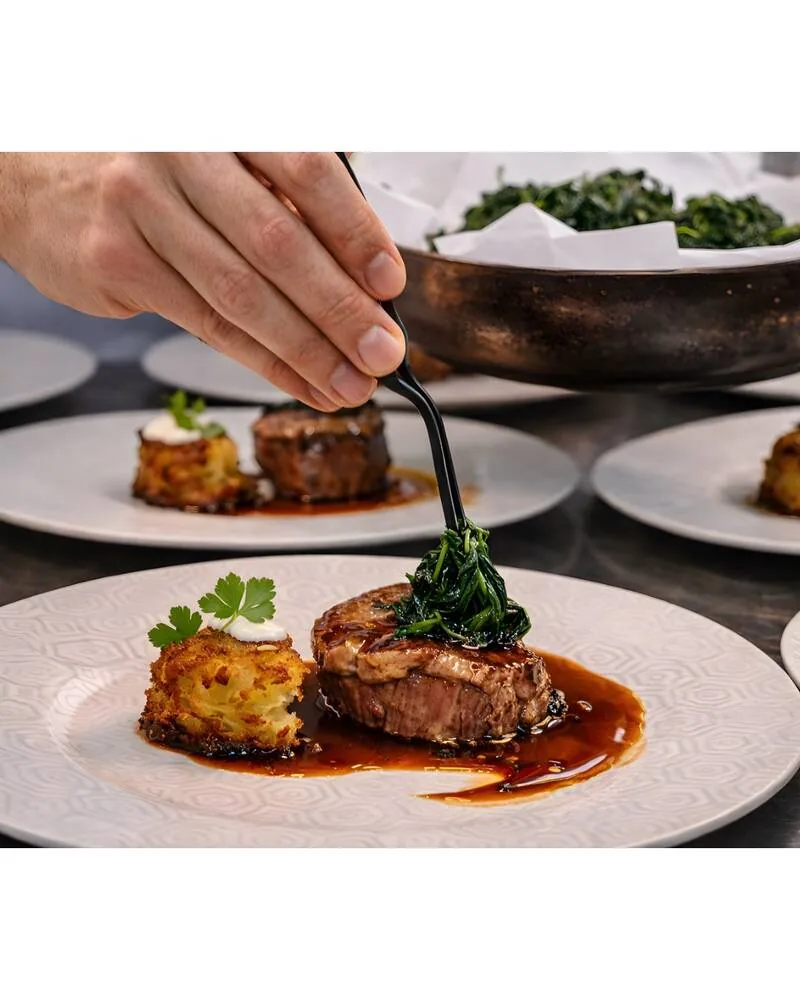
Kaiseki is a Japanese meal of many small courses. It grew up with the tea ceremony, and the name means “a stone in the robe”: Zen monks kept a warm stone under their clothes to keep hunger at bay. Today it is the high form of Japanese cooking, and its rules have held since the sixteenth century: every course has its own technique, no technique repeats, and an ingredient goes on the plate only while it is at its peak. The Japanese call that peak shun.
Kaiseki je japanski obrok od niza malih hodova. Nastao je uz čajnu ceremoniju, a ime znači „kamen u njedrima“: zen monasi su nosili topao kamen ispod odeće da zavaraju glad. Danas je to najviši oblik japanske kuhinje, a pravila mu važe od šesnaestog veka: svaki hod ima svoju tehniku, nijedna se ne ponavlja, i namirnica ulazi na tanjir samo dok je na vrhuncu sezone. Japanci taj vrhunac zovu šun.
Kappō is the same way of cooking, at a counter: the cook cuts and cooks in front of the guests. Apsis is meant as our kappō.
Kapo (kappō) je isti taj način kuvanja, samo za šankom: kuvar seče i kuva pred gostima. Apsis je zamišljen kao naš kapo.
We do not hide the model. From kaiseki we take the order and the meaning of each course; the ingredients, flavours and habits come from our own pantry: stock instead of dashi, bread instead of rice, slatko instead of fruit.
Ne krijemo uzor. Od kaisekija uzimamo redosled i smisao svakog hoda, a namirnice, ukuse i navike iz naše ostave: temeljac umesto dašija, hleb umesto pirinča, slatko umesto voća.
Every dish in the sequence can be ordered on its own. The whole sequence is one meal, and it costs less than ordering the dishes one by one.
Svako jelo iz niza može da se poruči posebno. Ceo niz je jedan obrok i košta manje nego kad se jela poruče jedno po jedno.
The Japanese names stay, because that is what the courses are called. Under each name: what it means in kaiseki, and what it is at Ostrvo. The dishes themselves change with the month.
Japanska imena ostaju, jer se hodovi tako zovu. Ispod imena: šta hod znači u kaisekiju i šta je na Ostrvu. Sama jela se menjaju sa mesecom.
An elliptical counter. The cooks work inside it along the long axis: drinks at one end, the pass in the middle, the way through to the kitchen at the other end. Guests sit along the long sides, sixteen seats.
Šank u obliku elipse. Kuvari rade unutra, duž duge ose: na jednom kraju napici, u sredini pas, na drugom kraju prolaz do kuhinje. Gosti sede duž dužih strana, šesnaest mesta.
A layout sketch, not an architectural plan.Skica rasporeda, ne arhitektonski projekat. Swipe the sketch sideways to see all of it.Prevuci skicu levo-desno da vidiš celu.
The counter is closed. All day the stocks simmer, the dough is made, and everything is filled and packed. By then the restaurants have sent their orders.
Šank je zatvoren. Ceo dan se kuvaju temeljci, mesi se testo, sve se puni i pakuje. Restorani do tada pošalju narudžbine.
The dishes of the sequence, one by one or the whole sequence. Next to each plate is a card that says which of our products went into it.
Jela iz niza, pojedinačno ili ceo niz. Uz tanjir stoji kartica na kojoj piše koji su naši proizvodi u njemu.
Those who have no time to sit down stop by for products, or for a ready meal to have at home.
Ko nema vremena da sedne, svrati po proizvode ili po gotovo jelo za kod kuće.
Two days off, for all of us.
Dva slobodna dana, za sve nas.
Ostrvo has no address yet. I am building it here, out loud.Ostrvo još nema adresu. Ovde ga gradim naglas.